


7 Everyday Tea Moments That Drive Guest Loyalty: A Hospitality & Retail Guide
In the hospitality and beverage industry, tea is rarely consumed as a mere beverage. For hotel guests, café regulars, and restaurant patrons, ordering tea is tied to specific emotional states, daily transitions, and social rituals.
While coffee is often driven by speed and high-caffeine necessity, tea represents a deliberate pause. When hospitality operators understand these distinct drinking occasions, they can curate beverage menus that go beyond basic product offerings—building memorable guest experiences that drive high gross margins and repeat business.
Here are the seven universal everyday tea moments every guest relates to, and how commercial venues can capitalize on them to optimize their beverage service.
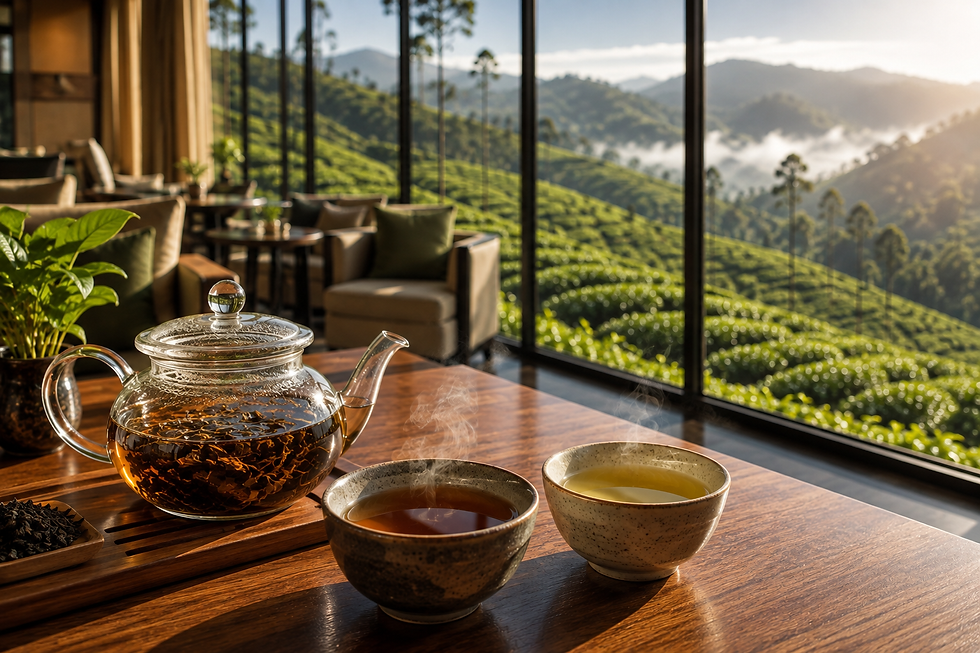
1. The Essential Morning Ritual
For millions of people, the first cup of tea sets the tone for the entire day. It is an intentional, quiet ritual before daily responsibilities begin.
Guest Need: Briskness, warming aroma, and a clean energy boost that pairs smoothly with breakfast foods.
Commercial Strategy: Feature robust Orthodox Black Teas or full-bodied Nilgiri morning blends on breakfast and room service menus. Ensure kitchen staff are equipped to serve hot water at $98^\circ\text{C}$ alongside fresh dairy or plant-based milks.
2. The Midday Break & Workplace Reset
"Let’s grab a tea." These four words drive significant mid-morning and afternoon foot traffic in commercial districts and corporate catering environments. The midday tea break is as much about stepping away from screens and connecting with colleagues as it is about hydration.
Guest Need: Mental clarity, a mild pick-me-up without a heavy coffee jitter, and a reason to socialize.
Commercial Strategy: Position refreshing High-Grown Green Teas and bright black teas for afternoon service. Cafés can bundle tea offerings with baked goods or light bites to raise average transaction values.
3. Rainy Weather & Comfort Pairings
Rainy weather creates an immediate spike in comfort-beverage sales. Watching rain from a café window or hotel lobby lounge with a steaming vessel in hand is one of the most widely recognized tea experiences.
Guest Need: Warmth, cozy ambiance, and indulgence.
Commercial Strategy: Leverage weather-driven promotions. Pair spiced black teas, CTC chai blends, or fragrant tea lattes with hot savory snacks or rich pastries to increase menu profitability during slow, inclement weather days.
4. Unplanned Hospitality & Warm Welcomes
In hospitality settings, offering a warm cup of tea upon arrival is the simplest, most effective gesture of welcome. From hotel check-ins to restaurant lounge waits, tea communicates genuine care.
Guest Need: Reassurance, comfort after travel, and immediate hospitality.
Commercial Strategy: Utilize high-quality Pyramid Tea Bags or pre-infused welcome stations in hotel lobbies, executive lounges, and reception areas. Single-serve formats maintain strict portion control and hygienic presentation while delivering fast service.
5. The Evening Unwind
After a long day of travel, meetings, or sightseeing, guests seek beverages that promote relaxation without disrupting sleep cycles.
Guest Need: Caffeine-free comfort, digestive relief after dinner, and stress reduction.
Commercial Strategy: Expand dinner and late-night room service menus with caffeine-free Herbal & Fruit Infusions (such as Chamomile, Peppermint, or Hibiscus). Positioning herbal infusions as post-dinner digestifs increases beverage sales following main courses.
6. Conversations That Start Over Tea
Tea has a unique capacity to facilitate extended conversation. Unlike quick espresso shots, a teapot service encourages guests to sit longer, catch up, and linger over their meal.
Guest Need: Community, lingering comfort, and shared enjoyment.
Commercial Strategy: Invest in attractive tableside presentation—such as ceramic or glass teapots with loose-leaf infusers. Increasing table dwell time in lounges and specialty tea rooms opens up opportunities for incremental food orders.
7. The Solitary Refuge
Not every guest is looking for social connection. Many seek a café corner or hotel room armchair to read, work, or reflect in complete solitude.
Guest Need: Quiet reflection, premium sensory experience, and undisturbed time.
Commercial Strategy: Offer single-estate, high-grade specialty teas—such as Single-Estate White Tea or Hand-Rolled Nilgiri Oolong—that reward slow, multiple steepings. Premium solitary offerings justify higher price points on specialty menus.
Commercial Mapping Matrix: Guest Moments to Menu Strategy
To streamline procurement, align your wholesale inventory with these core guest occasions:
Guest Tea Moment | Primary Sensory Need | Target Product | Operational Focus |
Morning Ritual | Briskness, depth, body | High-Grown Orthodox Black Tea | Fast extraction, milk compatibility |
Midday Break | Freshness, light energy | Specialty Green Tea / Iced Green Tea | Temperature control ($80^\circ\text{C}$ brew) |
Rainy Weather | Warmth, rich aromatics | Spiced Black Tea / Tea Lattes | Food-pairing combo bundles |
Guest Welcome | Immediate comfort, speed | Enveloped Pyramid Tea Bags | Low-labor room service/lobby setup |
Evening Unwind | Caffeine-free, calming | Herbal & Botanical Infusions | Post-dinner digestif menu placement |
Social Gatherings | Shareability, visual appeal | Teapot Service (Loose Leaf) | Premium table presentation |
Solitary Refuge | Subtle complexity, nuance | Single-Estate White or Oolong Tea | Multi-steep loose leaf ritual |
Preserving the Moment: Sourcing & Quality Control
An extraordinary tea moment depends on raw leaf quality and supply chain consistency. Serving a stale, bitter, or variable cup ruins the guest experience and harms brand reputation.
The Single-Estate Difference: Direct sourcing eliminates intermediary storage delays. Terrace Teas processes and packages single-estate Nilgiri teas directly at origin, ensuring high volatile oil retention, pristine freshness, and predictable performance across every batch your kitchen prepares.
Frequently Asked Questions for everyday tea moments
How does catering to specific tea moments improve beverage margins?
By aligning tea varieties with specific occasions (such as afternoon resets or post-dinner digestifs), venues can market tea as a curated experience rather than a basic commodity. Premium presentation and targeted menu positioning support higher menu prices while maintaining raw leaf costs under 10% per cup.
What is the minimum recommended tea selection for a boutique hotel or café?
A well-balanced commercial program requires 5 to 6 SKUs: one classic Black Tea, one High-Grade Green Tea, one Earl Grey or aromatic variant, one Matcha or specialty leaf, and two caffeine-free Herbal Infusions.
How can staff ensure consistency during busy service shifts?
Standardize dosage ($2.5\text{g}$ per cup/pot), water volume, and water temperature using pre-set water towers. Training staff to avoid over-steeping green teas prevents the astringency that alienates guests.

Comments