


White Tea vs Green Tea: Key Differences in Taste, Caffeine, and Health Benefits
Updated: Jul 22
Quick Answer
White tea and green tea both come from the Camellia sinensis plant, but they differ in processing, flavor, caffeine content, and antioxidant composition. White tea is minimally processed and offers a delicate, naturally sweet flavor, while green tea is lightly processed, has a grassier taste, and typically contains slightly more caffeine. Both provide valuable antioxidants and health benefits.
Key Takeaways
White tea undergoes the least processing of all tea types.
Green tea generally contains more caffeine than white tea.
White tea offers a lighter, sweeter flavor profile.
Green tea contains high levels of catechins, especially EGCG.
Both teas provide antioxidant and wellness benefits.
Choice depends on personal taste preferences and caffeine tolerance.
White Tea vs Green Tea: Comparison Table
Feature | White Tea | Green Tea |
Tea Plant | Camellia sinensis | Camellia sinensis |
Processing | Minimal | Light |
Oxidation | Very low | Low |
Flavor | Sweet, floral, delicate | Grassy, vegetal, fresh |
Caffeine | Lower to moderate | Moderate |
Antioxidants | High | Very high |
Popular Varieties | Silver Needle, White Peony | Sencha, Matcha, Dragon Well |
Price | Usually higher | More affordable |
Best For | Mild tea drinkers | Stronger tea flavor lovers |
Introduction
White tea and green tea are among the most popular specialty teas in the world. While both originate from the same tea plant, they differ significantly in harvesting methods, processing techniques, flavor characteristics, caffeine content, and consumer appeal.
For tea drinkers, understanding these differences helps in choosing the right tea for personal preferences and wellness goals. For tea retailers, wholesalers, and private-label brands, understanding these distinctions is essential for product positioning and customer education.
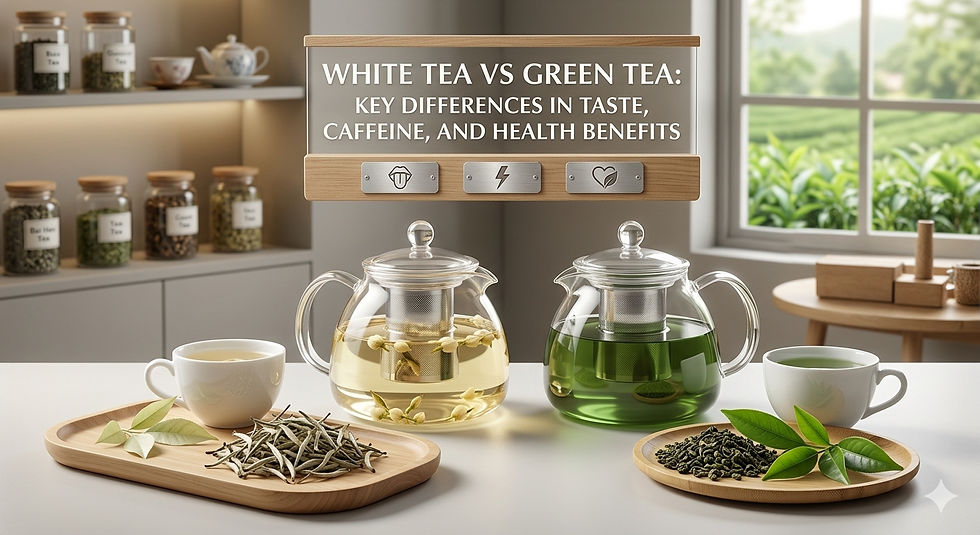
What Is White Tea?
White tea is the least processed type of tea. It is typically produced from young tea buds and tender leaves that are harvested and naturally withered before drying.
Popular varieties include:
Silver Needle (Bai Hao Yin Zhen)
White Peony (Bai Mu Dan)
Gong Mei
Shou Mei
Because of its minimal processing, white tea retains a delicate flavor profile and a high concentration of naturally occurring compounds.
What Is Green Tea?
Green tea is produced by harvesting tea leaves and quickly applying heat through steaming or pan-firing to prevent oxidation.
Popular green tea varieties include:
Sencha
Matcha
Dragon Well (Longjing)
Gyokuro
Gunpowder Tea
This process preserves the tea's green color and fresh vegetal characteristics.
White Tea vs Green Tea Processing
White Tea Processing
Harvest young buds and leaves
Natural withering
Drying
Packaging
Green Tea Processing
Harvest leaves
Heat treatment
Rolling
Drying
Packaging
Why Processing Matters
Processing affects:
Flavor
Aroma
Appearance
Antioxidant profile
Shelf life
Market value
White tea's minimal processing preserves delicate flavors, while green tea's heat treatment creates its characteristic grassy and fresh taste.
Taste Comparison
White Tea Flavor
White tea is often described as:
Sweet
Floral
Light-bodied
Smooth
Delicate
Premium Silver Needle tea may exhibit notes of honey, melon, and flowers.
Green Tea Flavor
Green tea is commonly described as:
Grassy
Vegetal
Fresh
Slightly bitter
Umami-rich
Japanese green teas often emphasize umami, while Chinese green teas may be nuttier and sweeter.
Which Tastes Better?
Taste is subjective.
Choose white tea if you prefer:
Mild sweetness
Floral notes
Less bitterness
Choose green tea if you prefer:
Stronger tea flavor
Vegetal notes
Umami characteristics
Caffeine Content Comparison
One of the biggest misconceptions is that white tea contains almost no caffeine. In reality, caffeine levels vary depending on harvesting methods, tea variety, and brewing conditions.
Typical Caffeine Levels per Cup
Beverage | Caffeine Content |
White Tea | 15–40 mg |
Green Tea | 25–50 mg |
Black Tea | 40–70 mg |
Coffee | 80–120 mg |
Which Has More Caffeine?
In most cases, green tea contains slightly more caffeine than white tea. However, premium white teas made primarily from young buds can occasionally contain similar caffeine levels.
Health Benefits of White Tea
Rich in Antioxidants
White tea contains polyphenols and flavonoids that help combat oxidative stress.
Supports Healthy Aging
The antioxidant compounds found in white tea may help protect cells from free radical damage.
Gentle and Easy to Drink
White tea is often considered less astringent and easier on the palate than stronger tea varieties.
Hydration-Friendly
Its mild flavor makes it suitable for regular consumption throughout the day.
Health Benefits of Green Tea
High EGCG Content
Green tea is especially rich in epigallocatechin gallate (EGCG), one of the most researched tea antioxidants.
Supports Metabolic Health
Green tea is commonly associated with healthy metabolism and weight management programs.
Heart Health Support
Regular green tea consumption may support cardiovascular wellness as part of a healthy lifestyle.
Cognitive Benefits
Green tea contains caffeine and L-theanine, a combination often associated with improved focus and alertness.
Which Tea Has More Antioxidants?
Both teas are excellent sources of antioxidants.
White Tea Contains
Polyphenols
Flavonoids
Catechins
Green Tea Contains
EGCG
Catechins
Polyphenols
Green tea is widely recognized for its exceptionally high catechin content, while white tea benefits from minimal processing that helps preserve naturally occurring compounds.
White Tea vs Green Tea for Weight Management
Both teas can be part of a balanced diet and healthy lifestyle.
White Tea Advantages
Lower caffeine
Smooth flavor
Easy daily consumption
Green Tea Advantages
More extensively researched
Higher catechin levels
Slightly higher caffeine content
Neither tea should be considered a standalone weight-loss solution.
Which Tea Is Better for Daily Drinking?
Choose White Tea If You Want
Lower caffeine intake
Delicate flavor
Premium tea experience
Minimal bitterness
Choose Green Tea If You Want
Stronger taste
More caffeine
Higher EGCG content
Greater variety of styles
Many tea enthusiasts enjoy both depending on the time of day and personal preferences.
Common Mistakes When Comparing White Tea and Green Tea
Assuming White Tea Is Caffeine-Free
White tea naturally contains caffeine.
Believing One Tea Is Universally Better
Both teas provide valuable health benefits.
Ignoring Tea Quality
Harvesting standards, origin, and processing quality often influence tea quality more than tea type alone.
Over-Steeping
Over-brewing can create bitterness and negatively impact flavor.
Brewing Recommendations
Factor | White Tea | Green Tea |
Water Temperature | 75–85°C | 70–80°C |
Steep Time | 2–5 Minutes | 1–3 Minutes |
Re-Steeps | 2–4 | 2–3 |
Flavor Outcome | Sweet and delicate | Fresh and vegetal |
Conclusion
White tea and green tea come from the same plant but offer distinctly different experiences. White tea provides a delicate, naturally sweet flavor with minimal processing and lower caffeine levels, while green tea delivers a fresher, more vegetal taste and slightly higher caffeine content. Both teas are rich in antioxidants and can be valuable additions to a healthy lifestyle. The best choice ultimately depends on your flavor preferences, caffeine tolerance, and wellness goals.
Frequently Asked Questions
Is white tea healthier than green tea?
Both teas offer significant health benefits and antioxidant content. Green tea has been studied more extensively, while white tea is valued for its minimal processing.
Which tea contains more caffeine?
Green tea generally contains slightly more caffeine than white tea.
Does white tea help with weight management?
White tea can support a healthy lifestyle but should not be viewed as a weight-loss solution on its own.
Why is white tea more expensive?
Premium white teas often use young buds, require careful harvesting, and are produced in smaller quantities.
Can I drink white tea every day?
Yes, most healthy adults can enjoy white tea daily as part of a balanced lifestyle.


Comments